
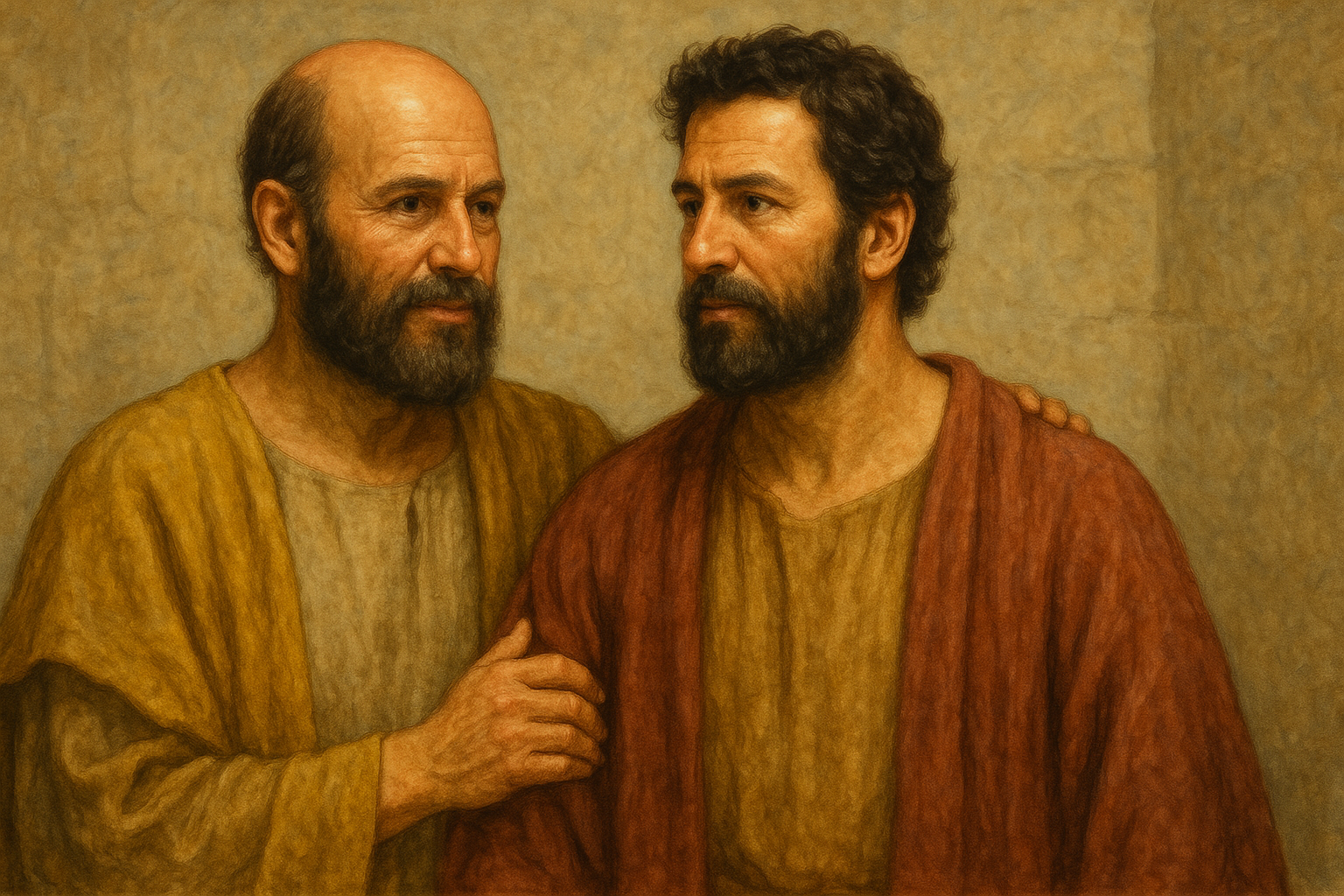
In Acts Chapter 15, Paul and Barnabas disagree on taking John, called Mark along with them. After all those times spent together, I’m curious how they couldn’t come to an agreement that they ended up separating over this. Explain the relationship between Paul and Barnabas. Paul tend to be viewed as the leader of the two and Barnabas as his sidekick, but reading the Acts again, it just feels like they were just companions. Also, explain this John, called Mark situation.
Response:
Alright, let’s unpack this — because Acts 15 is not just a “disagreement” but the kind of sharp fallout that makes you blink and go, “Wow, that escalated quickly.”
1. The Relationship Between Paul and Barnabas
At first glance in Acts, Paul often seems like the main speaker, so modern readers sometimes cast Barnabas as the “sidekick.” But if we rewind to their first encounters, the dynamic looks different:
Barnabas’ Early Role
- Before Paul was “Paul the Apostle,” he was Saul the feared persecutor. When Saul tried to join the disciples in Jerusalem after his conversion, the believers were terrified and skeptical.
- Barnabas was the one who vouched for him (Acts 9:26–27), introducing him to the apostles and validating his conversion story. Without Barnabas, Paul’s ministry in the early church might have been delayed or sidelined.
- Barnabas was already well-respected in the church at Jerusalem. He had been nicknamed Barnabas (“Son of Encouragement”) by the apostles (Acts 4:36), a sign of trust and esteem.
Partnership in Ministry
- When the church in Antioch needed leadership, they sent Barnabas(Acts 11:22–24). Barnabas then went to Tarsus to find Saul and bring him to Antioch (Acts 11:25–26).
- On their first missionary journey (Acts 13–14), they’re initially listed as “Barnabas and Saul” (Acts 13:2, 7), which usually implies Barnabas had the senior role at the start.
Later, Luke starts writing “Paul and Barnabas” (Acts 13:43 onward), reflecting Paul’s growing prominence as the main speaker and theological driver. - Dynamic shift: Barnabas was a natural encourager and reconciler; Paul was a direct, uncompromising strategist. Over time, Paul’s leadership in mission work became more visible, but they remained companions and co-workers.
2. Who Was John, Called Mark?
- Identity: He was the cousin (or close relative) of Barnabas (Colossians 4:10) and the probable author of the Gospel of Mark.
- Involvement: He accompanied Paul and Barnabas on the first missionary journey (Acts 13:5), but partway through, he left them and returned to Jerusalem (Acts 13:13).
- The Problem: Luke doesn’t explain why he left, but possibilities include:
- Homesickness or family obligations.
- Fear or discouragement — the journey got dangerous.
- Disagreement with the mission’s direction (Paul turning to Gentiles).
Whatever the reason, Paul saw it as desertion and a breach of trust.
3. The Fallout in Acts 15:36–41
The Disagreement
- After the Jerusalem Council (Acts 15), Paul suggested revisiting the churches they planted.
- Barnabas wanted to take Mark again.
- Paul insisted they shouldn’t, because Mark had abandoned them before.
- The Greek in Acts 15:39 says there was a παροξυσμός (paroxysmos), meaning a sharp contention — this wasn’t a mild “let’s agree to disagree” but a heated dispute.
The Separation
- Barnabas took Mark and sailed to Cyprus.
- Paul chose Silas and went through Syria and Cilicia.
4. Why Couldn’t They Resolve It?
Even the best ministry partnerships have breaking points, especially when:
- Different priorities clash
- Paul prioritized mission reliability: you can’t risk the trip on someone who quit once.
- Barnabas prioritized restoration: he believed in giving Mark another chance — especially since Mark was family.
- Different personalities
- Paul: mission-first, high standards, sometimes blunt.
- Barnabas: people-first, patient, encourager.
- God’s providence in division
- This split actually doubled the mission teams.
- Later evidence shows reconciliation:
- Paul later calls Mark a “fellow worker” and says “he is helpful to me in my ministry” (2 Timothy 4:11).
- Paul also sends greetings from “Mark, the cousin of Barnabas” in Colossians 4:10 — no bitterness there.
Summary Takeaway
- Paul and Barnabas started as equals, with Barnabas initially as the senior. Over time, Paul became the more prominent public leader, but they were co-laborers, not boss/assistant.
- John Mark was Barnabas’ relative who had quit on the first trip, and Paul refused to risk taking him again.
- The split wasn’t over doctrine but over trust, priorities, and personality — and God still used it to advance the gospel.