
In Matthew 1, Mary gets pregnant through the power of the Holy Spirit while she was a virgin. So the Jesus’ birth itself is supernatural and a miracle in itself. However, what is the significance of Jesus’ human birth through a virgin woman? And why did he choose to be born through a human and be raised up from a child to adult? Couldn’t God have chosen to make a man just like he did Adam and Eve, and have Jesus use that body? Jesus’ ministry didn’t begin until he was around 30. Are there some records of his life prior that age?
Of course. These are profound questions that get to the very heart of the Christian faith. Let’s explore them from a theological and historical perspective, drawing connections between the Old and New Testaments.
The Significance of the Virgin Birth
The birth of Jesus through the virgin Mary is indeed a foundational miracle, but its significance goes far beyond the supernatural event itself. It was theologically necessary for several key reasons:
- Fulfillment of Prophecy: God had been pointing to this moment for centuries. The prophet Isaiah, writing around 700 B.C., foretold, “Therefore the Lord himself will give you a sign: The virgin will conceive and give birth to a son, and will call him Immanuel” (Isaiah 7:14). The name Immanuel means “God with us.” The virgin birth was the literal fulfillment of this sign, demonstrating that Jesus was not just another prophet, but God Himself entering human history.
- To Establish a “Second Adam”: The Apostle Paul refers to Jesus as the “last Adam” or “second man” (1 Corinthians 15:45-47). The first Adam, through his disobedience, introduced sin and death into the world, passing a sinful nature to all his descendants. For Jesus to be the perfect sacrifice for sin, He had to be truly human but without this inherited sin nature. By being conceived of the Holy Spirit, Jesus’ lineage was not traced through a human father. This broke the chain of inherited sin, allowing Him to be born sinless—a perfect representative for humanity.
- To Reveal His Dual Nature: The virgin birth is the clearest demonstration of what theologians call the hypostatic union—the doctrine that Jesus is both fully God and fully man. From His mother, Mary, He received His human nature, making Him a descendant of Abraham and David and allowing Him to truly represent us. From the Holy Spirit, He received His divine nature. He was not half-God and half-man; He was 100% God and 100% man. This dual nature was essential for His role as the ultimate mediator between God and humanity.
Why Be Born a Baby and Not Created as a Man?
This question gets to the core of God’s plan for redemption and reveals His profound love and humility. While God certainly could have created a man like Adam, He chose the path of incarnation for specific and powerful reasons.
- To Be a Relatable and Sympathetic High Priest: The book of Hebrews explains this beautifully. In the Old Testament, the High Priest would offer sacrifices for the people’s sins. However, he himself was a sinner. Jesus became our perfect High Priest. The Bible says, “For we do not have a high priest who is unable to empathize with our weaknesses, but we have one who has been tempted in every way, just as we are—yet he did not sin” (Hebrews 4:15). By being born a helpless baby, growing through childhood, facing the challenges of adolescence, and working an ordinary job, Jesus experienced the full range of human life. He understands our joys, our sorrows, and our temptations because He lived them. This makes Him the perfect, compassionate intercessor for us.
- To Fulfill All Righteousness Under the Law: Jesus was “born under the law” (Galatians 4:4). He had to live a perfect life of obedience to God’s law to be the spotless sacrifice for our disobedience. He didn’t just appear and die; He actively fulfilled every requirement of the law throughout His entire life. By living from infancy to adulthood, He demonstrated the perfect human life that Adam failed to live and that we are incapable of living.
- To Demonstrate Ultimate Humility: The Apostle Paul captures this in his letter to the Philippians. Jesus, “being in very nature God, did not consider equality with God something to be used to his own advantage; rather, he made himself nothing by taking the very nature of a servant, being made in human likeness” (Philippians 2:6-7). The creator of the universe condescended to become a dependent baby, confined to time and space. This is the ultimate expression of God’s humble, sacrificial love.
The “Silent Years” and Ministry at Age 30
Your question about His life before His public ministry is one that has intrigued people for centuries.
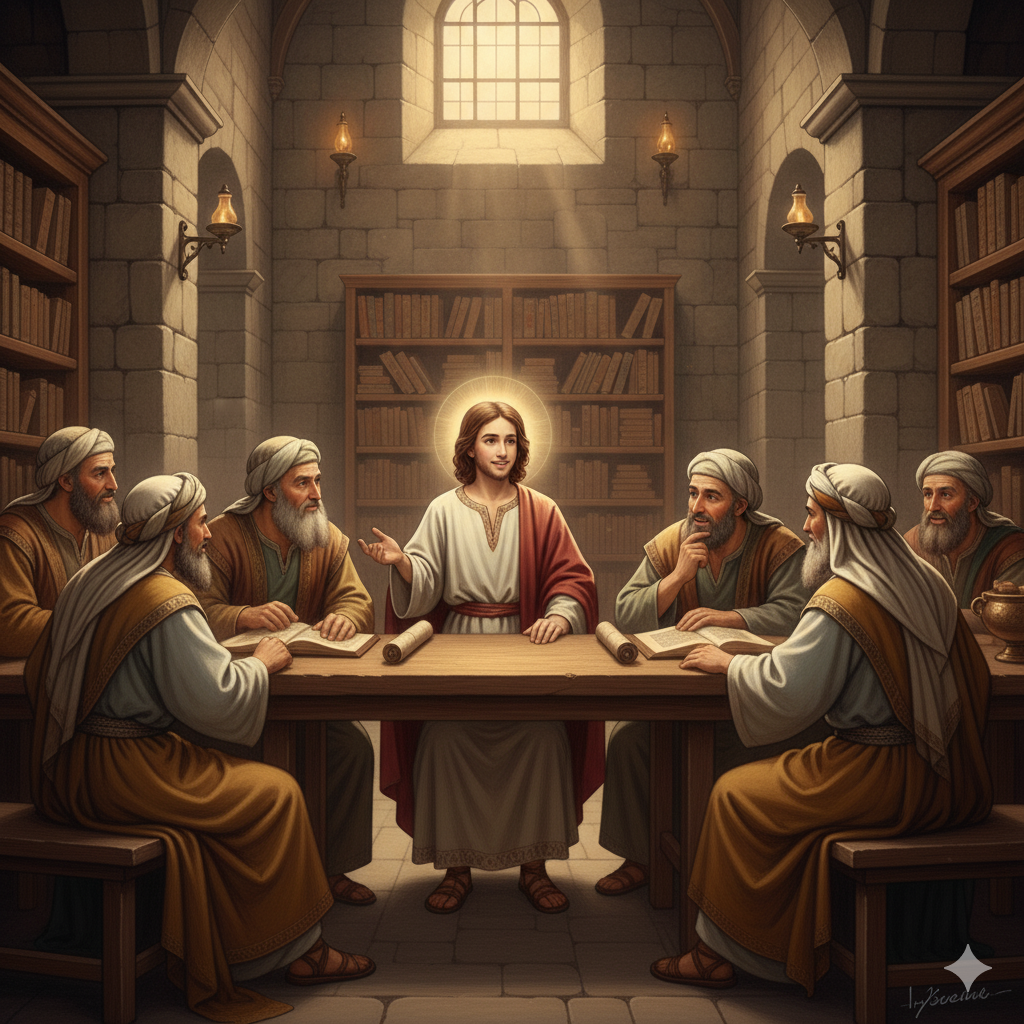
- What the Bible Records: The canonical Gospels are largely silent about Jesus’ life between the ages of 12 and 30. We have the account of His birth and the flight to Egypt in Matthew 1-2. Luke 2 gives us the precious story of a 12-year-old Jesus being found in the Temple in Jerusalem, astonishing the teachers with His understanding. When His parents found Him, He asked, “Didn’t you know I had to be in my Father’s house?” (Luke 2:49). This single event shows His early and profound understanding of His unique identity and mission. After that, Luke simply summarizes, “And Jesus grew in wisdom and stature, and in favor with God and man” (Luke 2:52).
- Historical Context and Tradition: During this time, Jesus lived in Nazareth, a small town in the region of Galilee. He was known as “the carpenter’s son” (Matthew 13:55) and a “carpenter” Himself (Mark 6:3). He would have learned this trade from his earthly father, Joseph, living an ordinary, faithful Jewish life. There are many non-biblical, apocryphal texts (like the “Infancy Gospel of Thomas”) that claim to fill in these years with fantastical miracles, but these are not considered historically reliable or divinely inspired by the church.
- Why Begin at Age 30? The timing of Jesus’ public ministry was, like everything else, deeply purposeful. In Jewish culture and according to Old Testament law, the age of 30 was a significant milestone.
- Priestly Service: Levites officially began their full service in the tabernacle at 30 years old (Numbers 4:3, 47). As our Great High Priest, Jesus stepping into His public role at this age was deeply symbolic.
- Age of Maturity: It was considered the age of full maturity and readiness for significant leadership roles. Both King David (2 Samuel 5:4) and Joseph when he began to serve Pharaoh (Genesis 41:46) were 30 years old when they stepped into their prominent positions.
By waiting until He was 30, Jesus honored the cultural and religious customs of His time, ensuring there would be no obstacle to His message based on His age, and stepping onto the stage of history at the exact moment God had ordained.