
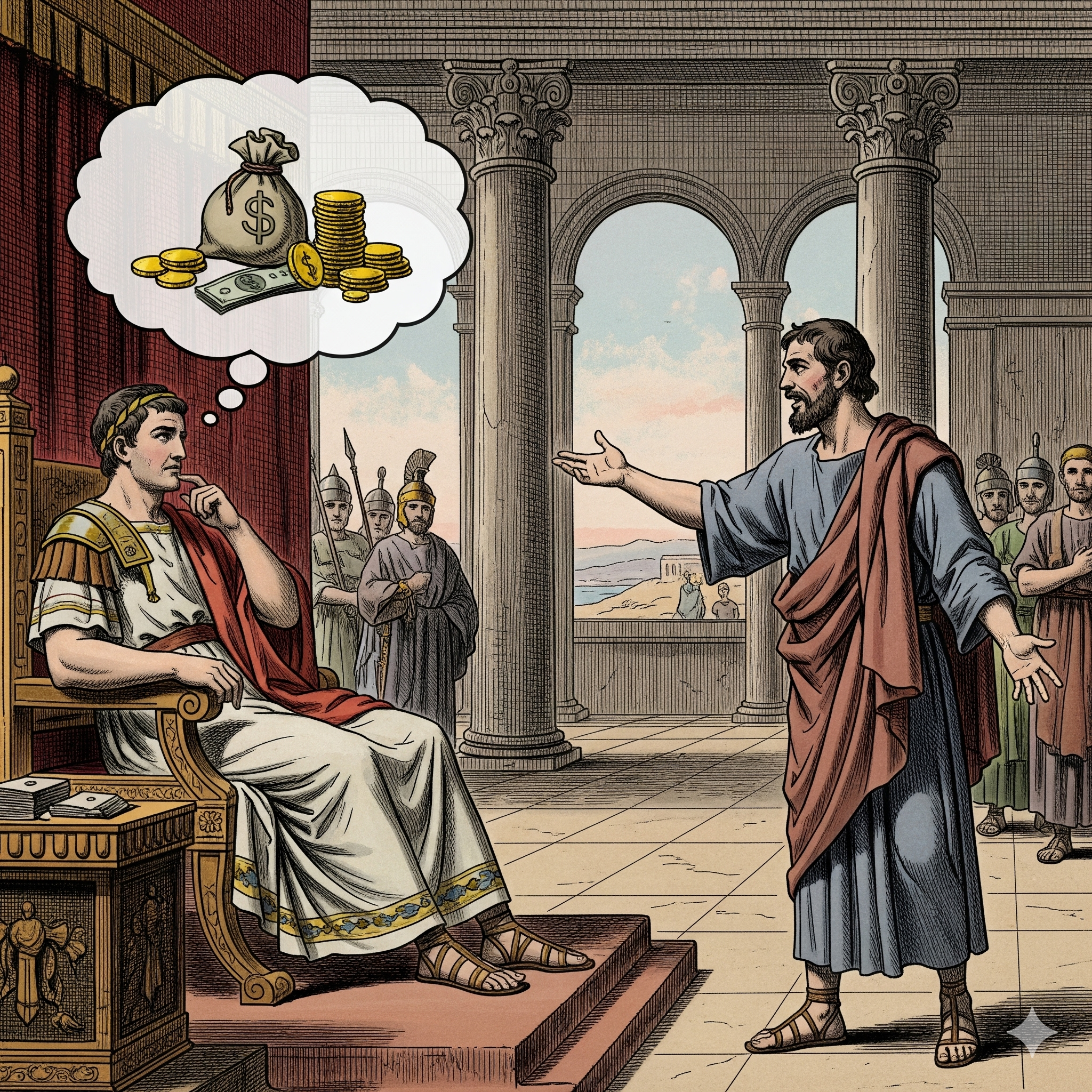
In Acts 24, Paul was put on trial before Felix, the governor of Caesarea. Felix couldn’t decide on the case quickly so he just put Paul in prison, and it says he talked with him periodically. In verse 27, it says TWO years passed like that with Paul in prison! Is there any historical record that talks about what happened during that two years? For Paul, it could’ve felt like an eternity staying in prison for that long when his mission was to spread the gospel.
Response:
The Bible itself provides the primary historical record for what happened during the two years Paul was imprisoned in Caesarea. While other historical sources corroborate the existence and character of Governor Felix and his successor Festus, the Book of Acts offers the most detailed account of this specific period.
Paul’s Imprisonment in Caesarea
When Paul was transferred from Jerusalem to Caesarea, the Roman capital of Judea, he was placed under the authority of Governor Felix. This occurred around AD 57-59. The Jewish leaders followed him to Caesarea and presented their case against him, but Felix, who had a good understanding of “The Way” (the term for early Christianity), found no real fault in Paul. However, Felix was a man of corruption, known for his cruelty and desire for bribes. This is a fact attested to by the Roman historian Tacitus, who wrote that Felix “exercised the power of a king in the spirit of a slave.”
According to Acts 24:26-27, the two years of Paul’s imprisonment were marked by three key things:
- Felix’s Hope for a Bribe: Felix would send for Paul frequently, not to grant him justice, but “hoping that money would be given him by Paul.” The governor’s greed and desire for personal gain were the primary reasons for the prolonged imprisonment.
- Paul’s Preaching to Felix and Drusilla: Despite his chains, Paul used every opportunity to evangelize. The Bible records a significant conversation where Paul spoke to Felix and his wife, Drusilla, who was a Jewess and a daughter of King Herod Agrippa I. Paul “reasoned about righteousness, self-control, and the coming judgment” (Acts 24:25). Felix was so convicted by Paul’s words that he became frightened and ended the conversation.
- Felix’s Procrastination and Political Maneuvering: Felix’s ultimate inaction was a mix of greed and a desire to appease the Jewish leaders. He knew Paul was innocent of any crime against Roman law, but to “do the Jews a favor,” he left Paul in prison when he was replaced by the new governor, Porcius Festus. This transition marks the end of the two-year period mentioned in Acts 24:27.
While Paul’s mission was to spread the Gospel, this seemingly frustrating delay was part of God’s plan. It allowed Paul to bring the message of Christ to the highest levels of Roman government and to the very individuals who held power in the region.